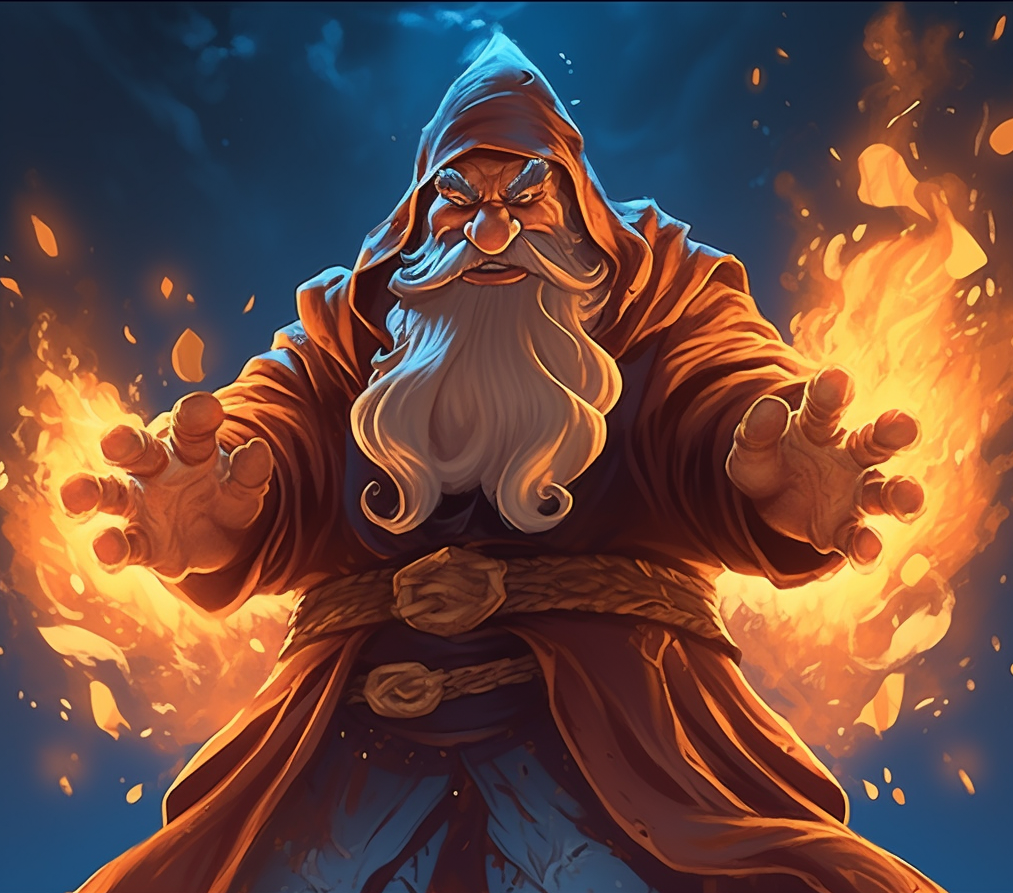
In the heart of a dimly lit tavern, lost somewhere in a strange multiverse of Dungeons and Dragons, a group of individuals as diverse as they were noisy gathered. Thunderous laughter echoed through the smoky establishment as dice of all shapes whirled through the air, coming to rest with a satisfying clatter to determine the fate of their owners. Seated on rickety stools around an old, weathered wooden table, our heroes — or at least what one could call them — were gearing up for a well-deserved evening of beer, dice, and camaraderie.
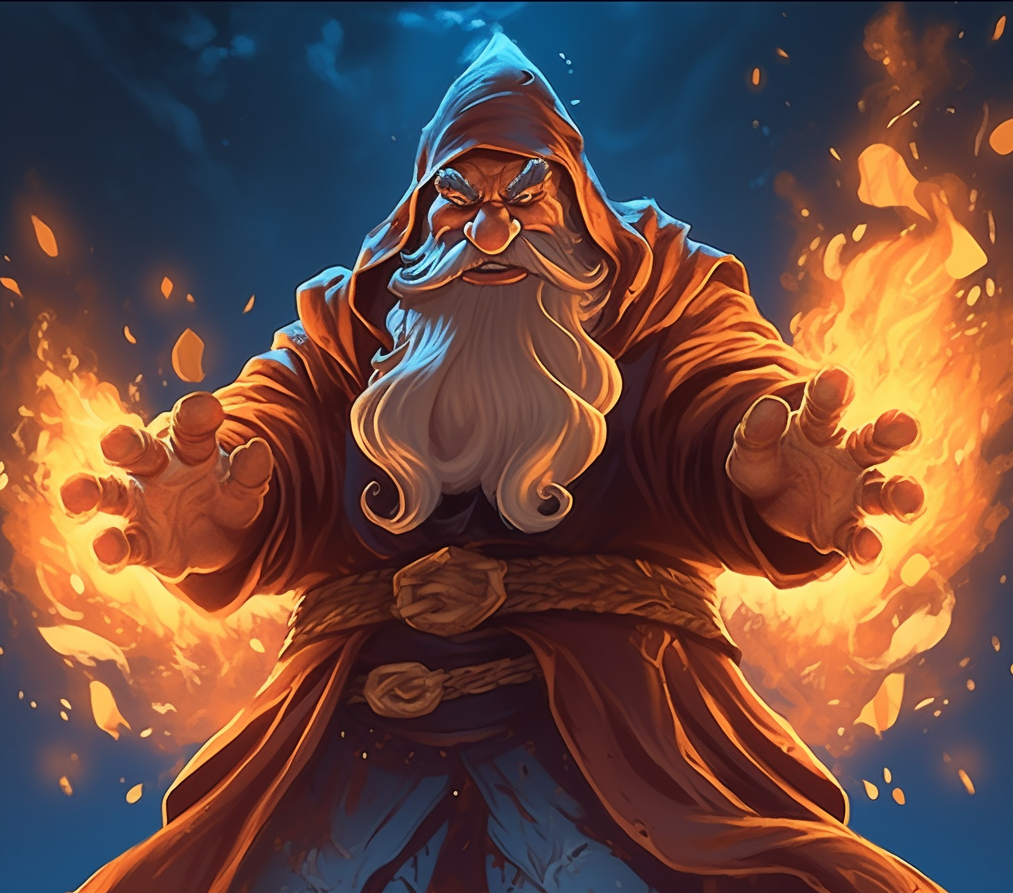
The Game Master
Let’s Make Introductions!
At the center of this eclectic gathering stood the Ranger, self-proclaimed leader of the team. His main mission was to maintain peace within the group, especially between the Elf and the Dwarf — two individuals known for their disagreements. However, despite his efforts, he was often overwhelmed by despair when things went awry. The Ranger wasn’t specialized in any particular skill but rather versatile, with the unfortunate habit of overestimating his abilities.

The Ranger
To his left, the Barbarian held his place — a colossal figure with bulging muscles, wielding a sword as an extension of his mighty arm. His life boiled down to two passions: combat and carousing with the Dwarf. He held no fondness for magic, which he saw as a weakness, and was quick to judge other group members as weaklings if they didn’t share his fervor for melee.

The Barbarian
On the other side of the table, the Elf lounged with natural grace. With her enchanting beauty, she appeared to be free from all worries. Her carefree and lighthearted demeanor stood in stark contrast to her companions. She maintained a tumultuous relationship with the Dwarf, their mutual antipathy having become legendary among the tavern’s regulars.
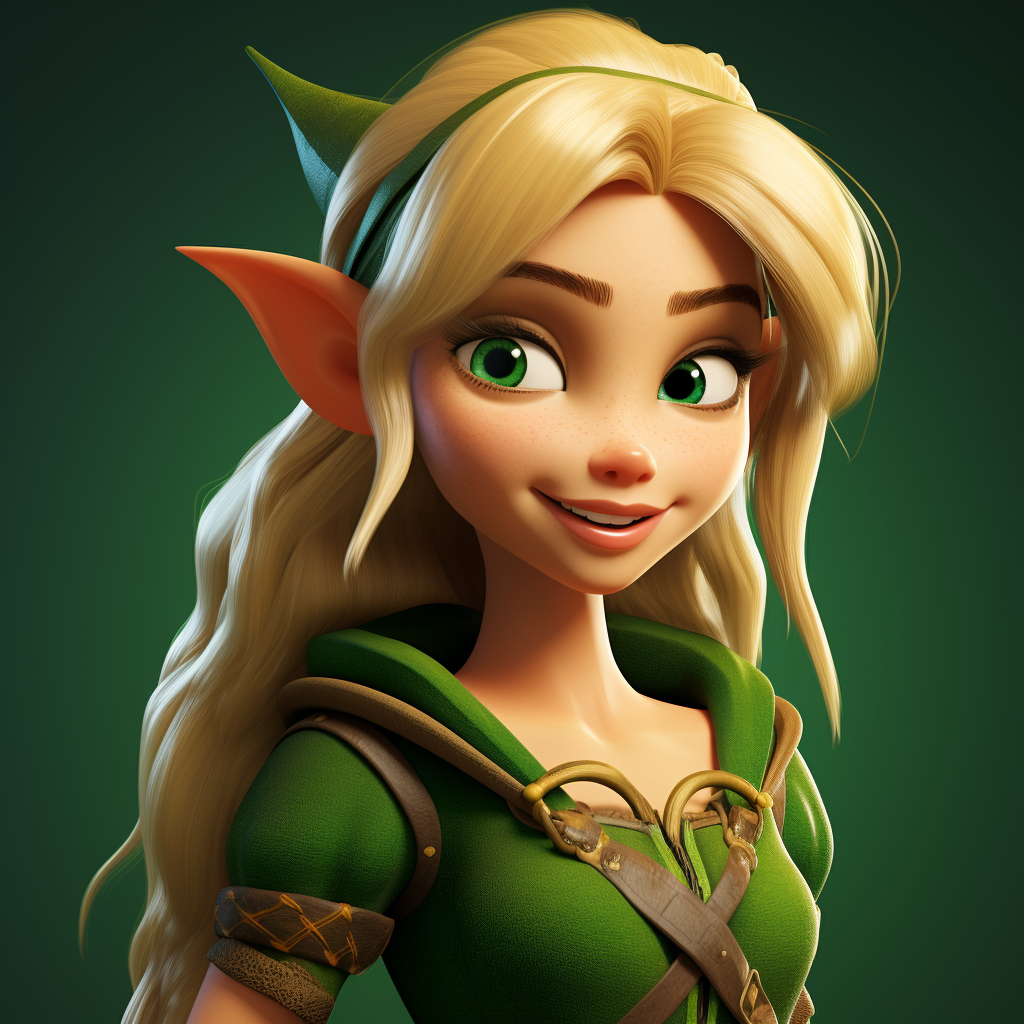
The Elf
Next to the Barbarian, the Dwarf, a robust and choleric warrior, prepared to enter the arena of the impending game. His primary obsession was money, and he was willing to do anything to fill his purse. The Dwarf was also an expert in complex calculations, particularly when it came to distributing loot among the group, taking into account criteria such as time spent together, the danger of situations, and the experience gained in battles.
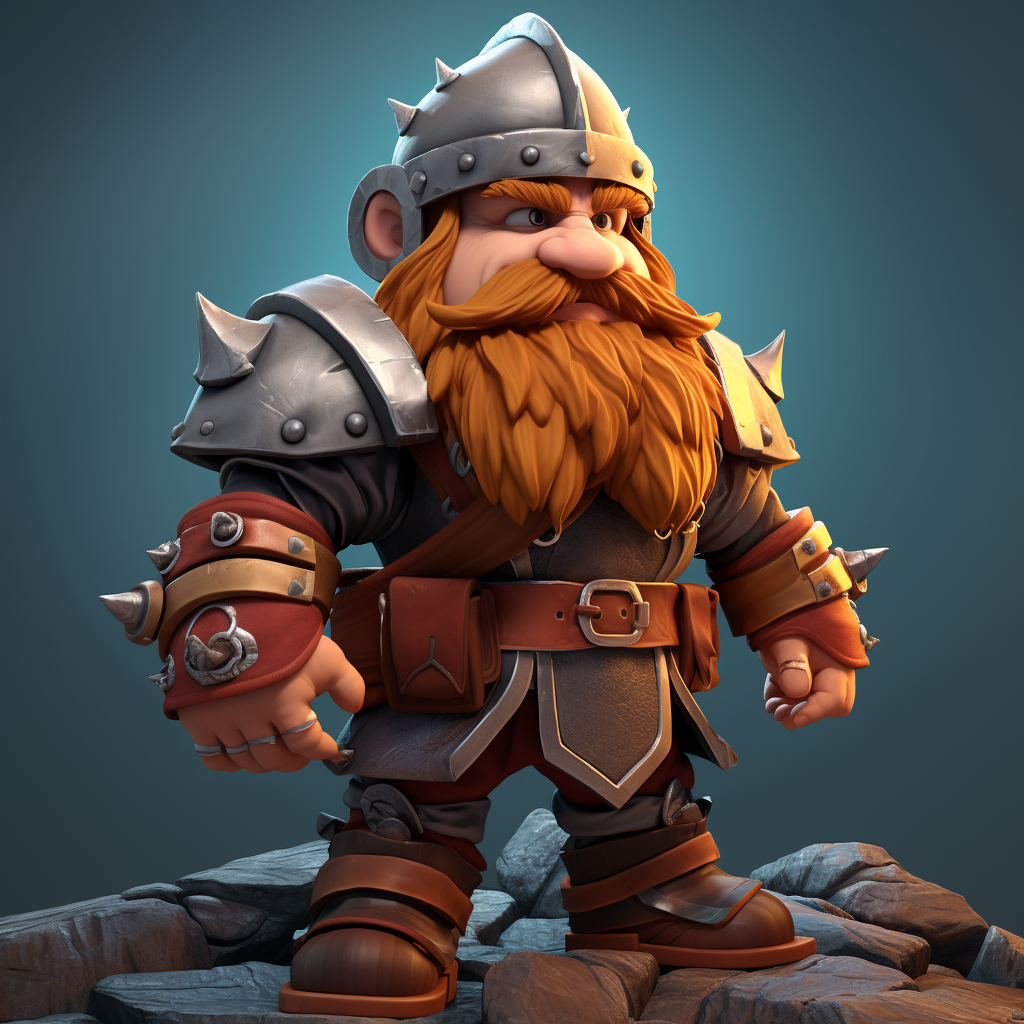
The Dwarf
In the shadows, the Rogue, dressed discreetly, observed the scene. His sharp eyes scanned for the next purse to steal. His legendary agility and dexterity made him a master in the art of theft, but it also meant that he couldn’t resist pilfering small things, even among his companions.

The Rogue
Next to the Elf, the Magician sat — a woman with deep red hair, passionate about all sorts of literature, with a particular fascination for spellbooks. Despite her limited magical talents, she made up for it with her in-depth knowledge of books. The Magician remained an invaluable source of knowledge for the group and effectively shared leadership with the Ranger.

The Magician
Finally, by their side stood the Ogre, an imposing creature whose insatiable appetite manifested in primitive grunts. Although kind in nature, he remained a constant source of trouble, overturning chairs and breaking glasses at regular intervals. He had a special connection with the Magician — the only one capable of understanding his language.
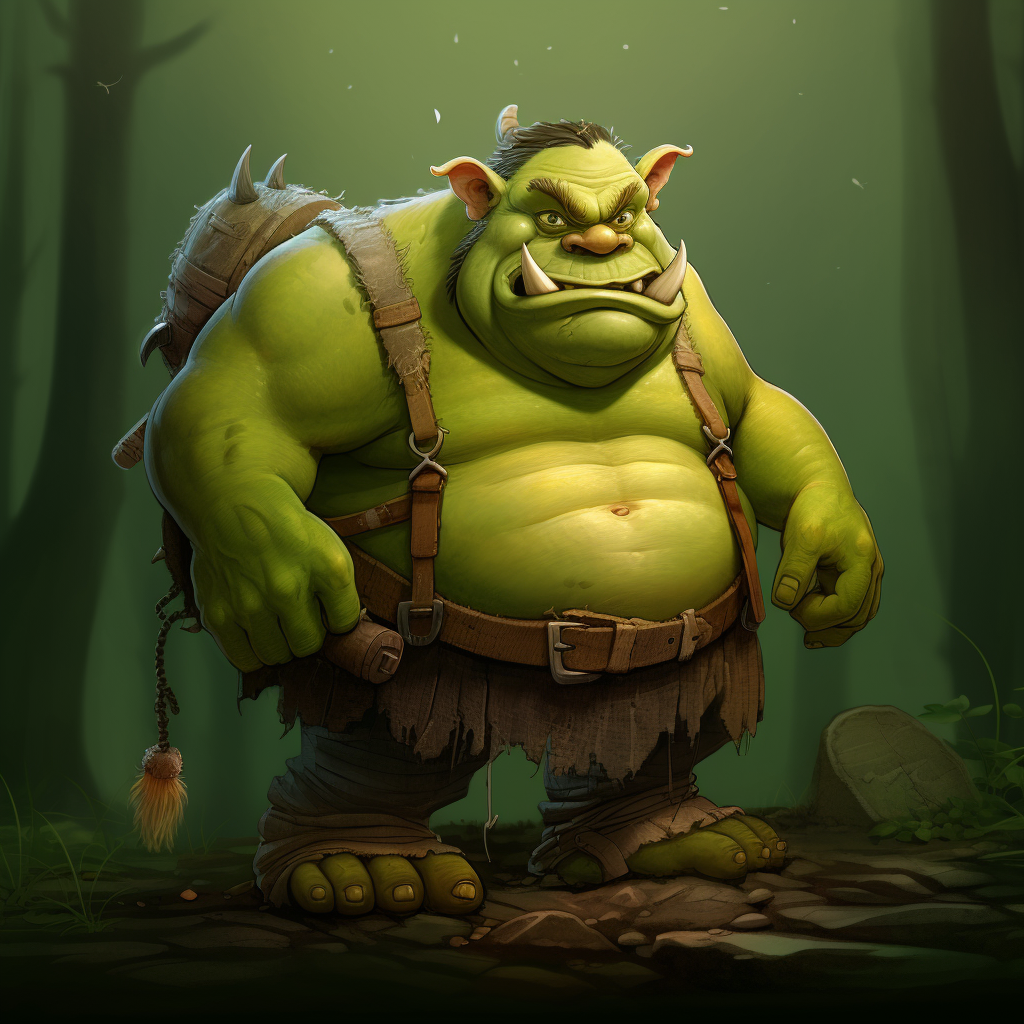
The Ogre
The Rules of the Game
After several pints of beer, the Magician decided to spice up the evening. She suddenly pulled out a set of 14 mysterious dice from her bag — 2 each — and announced: “My friends, we’re going to spice up this evening with a dice game!”
The Magician unrolled an old parchment containing the fundamental laws that had to be read before playing. Here they are, magically transcribed.
Dear mortal, beware, for I shall initiate you into the profound mysteries that govern these sacred dice. Let be a measurable space, where is the universe and is a sigma-algebra. A probability measure is a measure with a total mass of , and it satisfies the following three axioms:
- For any set , the probability is a real number between and .
- The probability of the universe is equal to , meaning .
- Probability is -additive: for any countable family of pairwise disjoint sets in , .
In particular, .
Seeing the Elf, Barbarian, and Ranger scratch their heads, the Magician simplified: the universe is simply all possible outcomes. For a die, . The first axiom says probabilities are always between and . The second says the total probability of all outcomes equals . The third says that for two events that cannot happen at the same time, the probability of either occurring is the sum of the individual probabilities.
She continued: the laws of probability can be described in three major categories.
Position parameters influence the central tendency of the distribution — they determine the values around which probability is most concentrated. Among these: the expectation (a measure of average), the median (the central value), and the mode (the most frequent value).
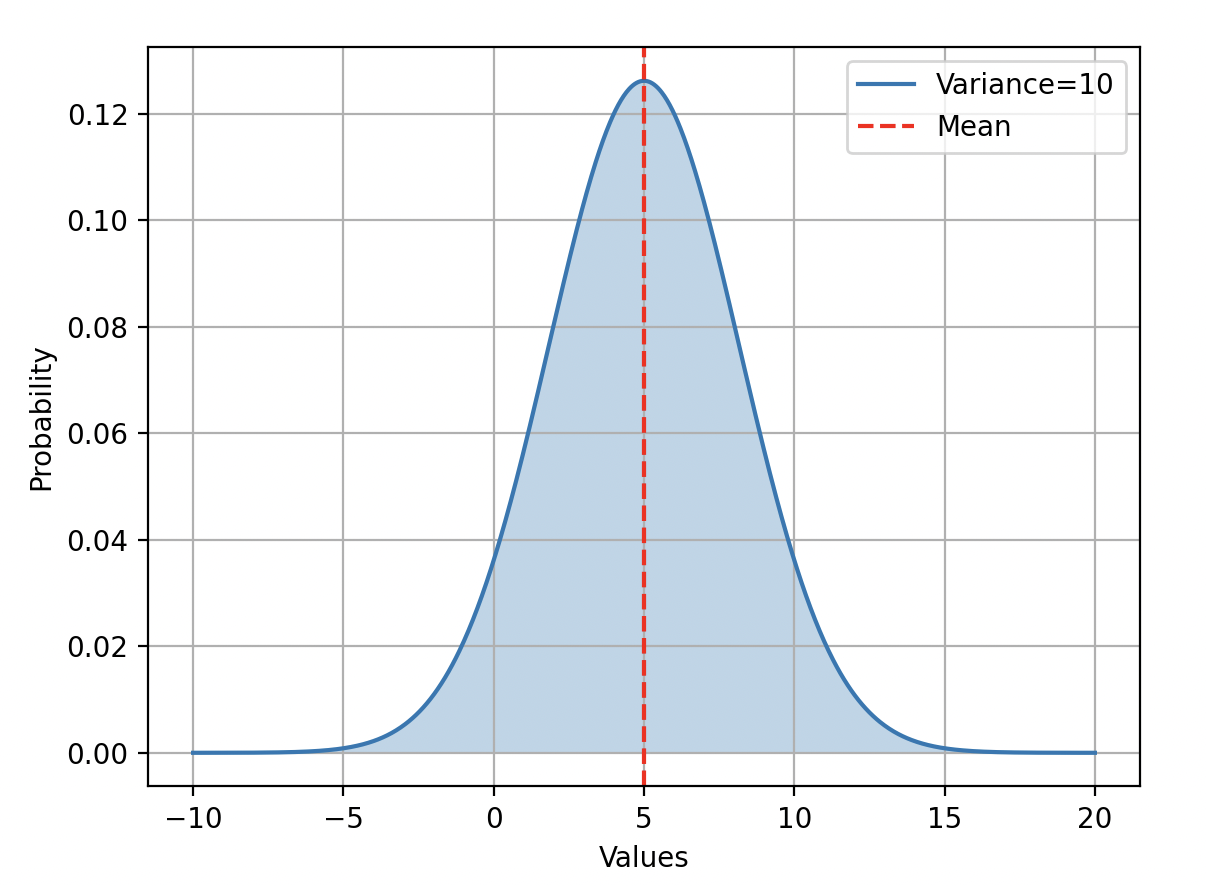
Normal distribution with a mean of 5 and a variance of 10.
Scale parameters measure how spread out values are around the central values. Variance, standard deviation, and interquartile range are examples. If variance is close to zero, individual values cluster closely around the mean; high variance indicates a greater overall spread.
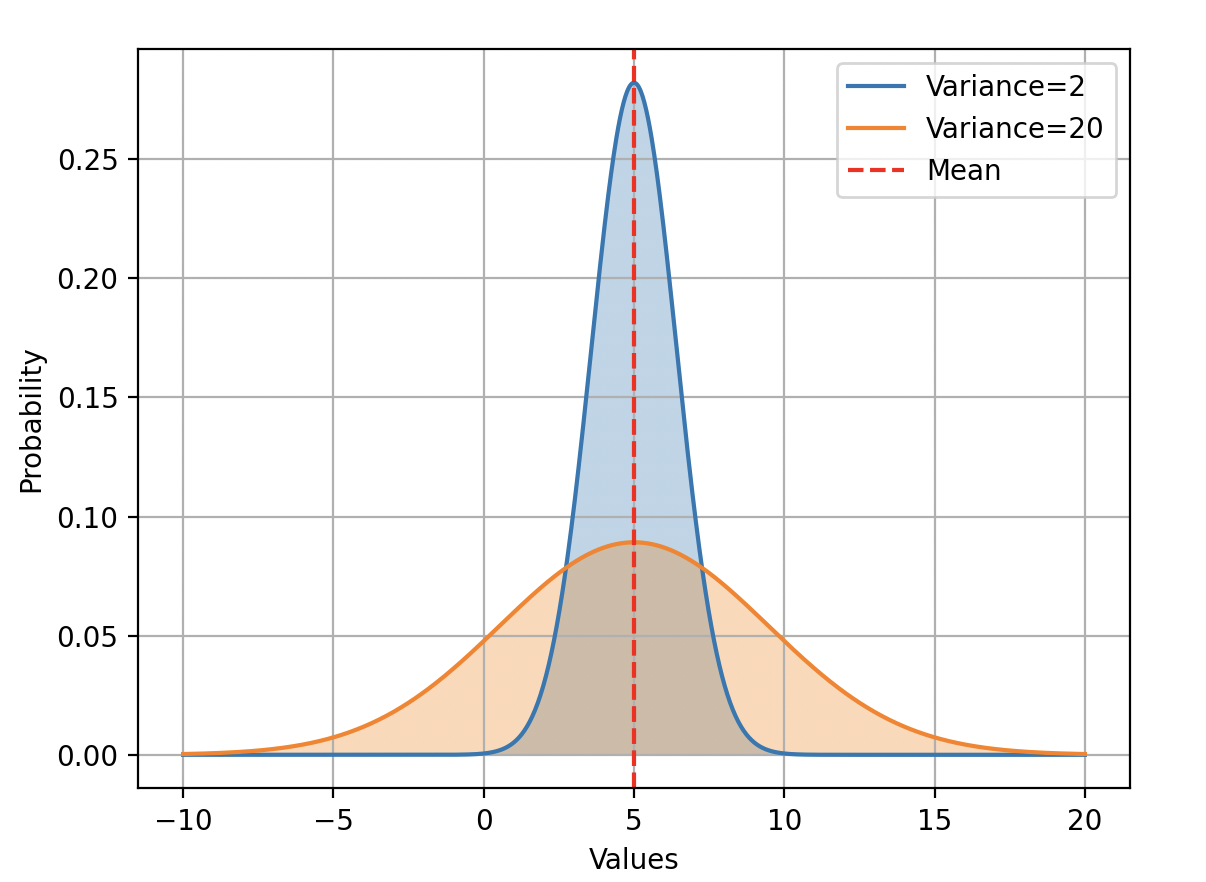
Two normal distributions: one with mean 5 and variance 2, the other with mean 20.
Shape parameters describe how probabilities change as we move away from the central values. Skewness measures whether the distribution is tilted to one side; kurtosis examines how closely values concentrate near the mean.
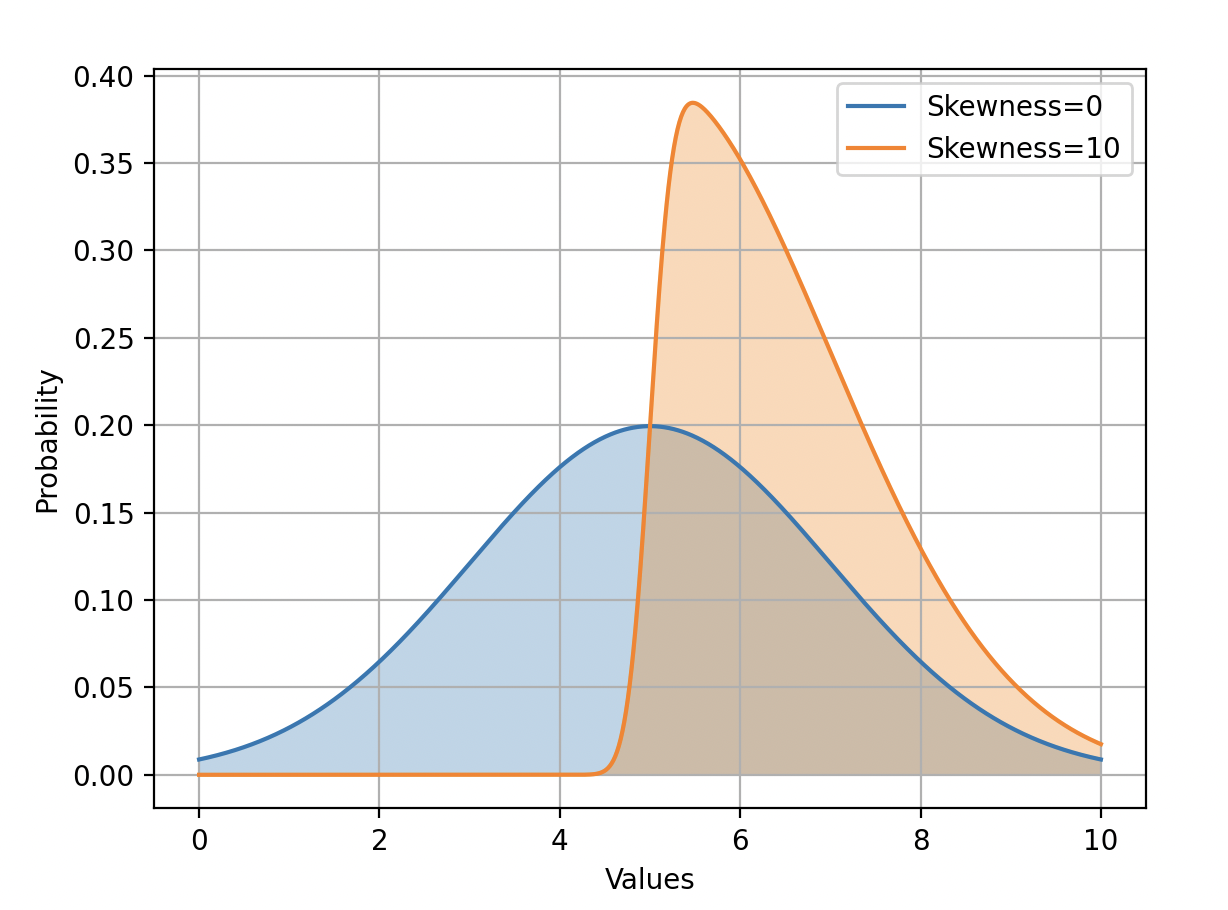
Normal distribution with zero skewness and a normal distribution with skewness equal to 10.
The Law of the Die
“Now,” said the Magician, “let’s dive into the heart of the matter: the discrete uniform distribution. It ensures equiprobability — each outcome has an equal probability for each mode in a finite set.”
Imagine a fair coin. When you toss it, each side has an equal chance of appearing: .
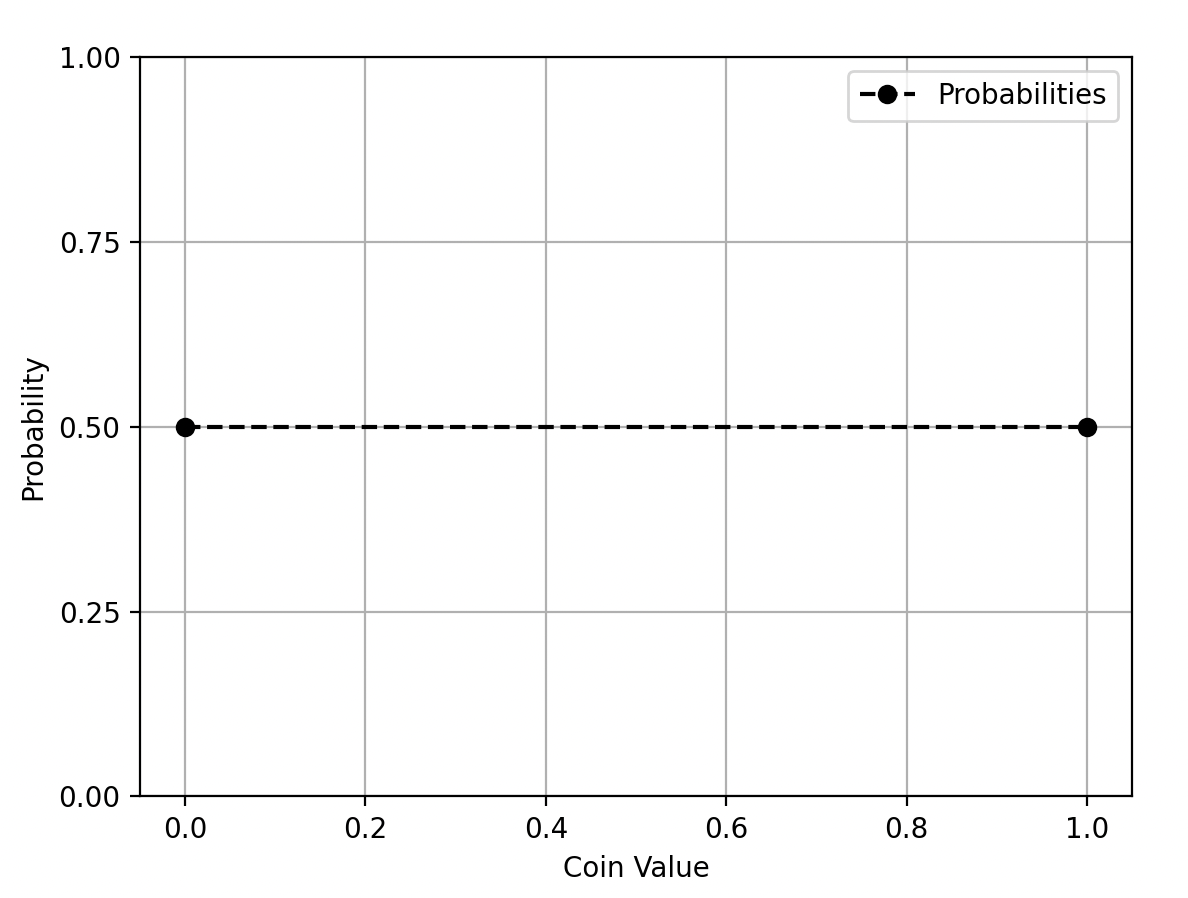
Discrete uniform distribution with two outcomes (coin toss).
For a standard die, there are 6 faces — and if balanced, all are equiprobable.
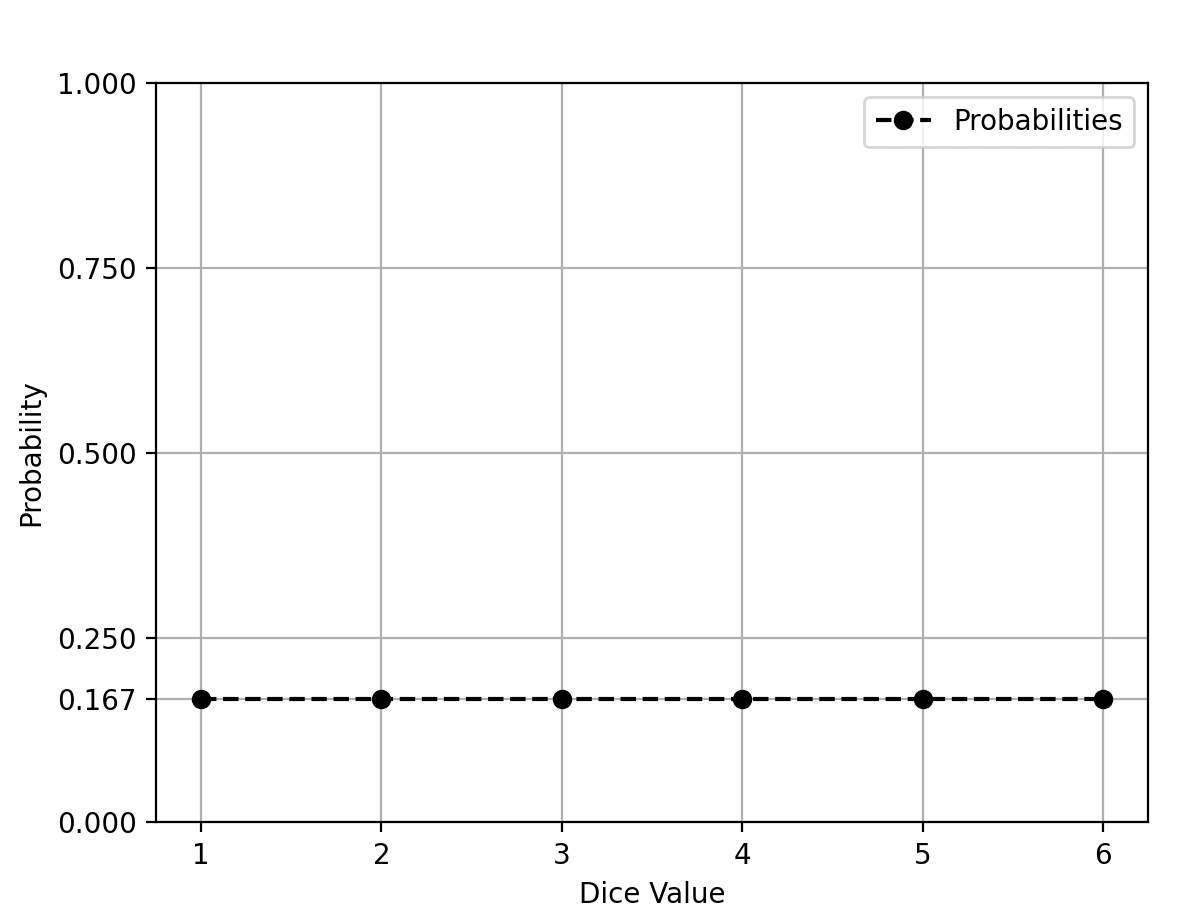
Discrete uniform distribution with six outcomes (roll of a die).
If is the random variable for a roll of a fair die:
- Expectation:
- Median:
- Mode: none (every face is equiprobable)
- Variance:
- Skewness: zero
- Kurtosis: finite
The Adventure Begins
It was a night of revelry. The Dwarf, in a bad mood, blamed every misfortune on the Elf. The Rogue stole a waitress’s panties. The Barbarian punched a bouncer and got beaten down. The Ogre swallowed a billiard ball. The Dwarf, drunk, vomited his beer on the innkeeper. The brawl that followed was inevitable, and all the adventurers eventually found themselves in the dungeon.
The Dungeon
The Ranger gathered the group in a dim corner of their cell. “We are an elite troupe — we cannot resign ourselves to being locked up like rats. We need a plan.”
The Elf and the Dwarf bickered like children. The Barbarian, bored, decided to use his Herculean strength to break down the door. Unfortunately, he had taken a severe blow to the head and was still groggy.
The Game Master asked him to make his disadvantage roll — meaning he would roll the die twice and keep the less favorable result. Moreover, the door was made of steel.
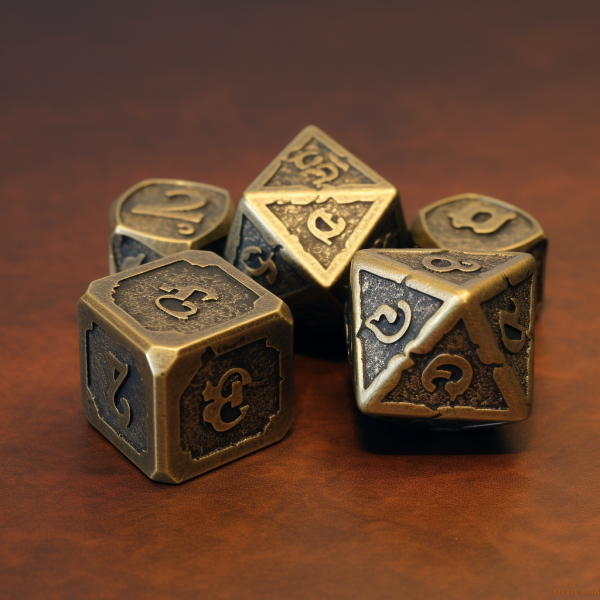
The Game Master’s dice
Disadvantage roll: roll 1d6 twice, keep the lower result.
The result of this roll determines what happens next — and whether the band of adventurers escapes the dungeon, or finds themselves bound for an even worse fate.
To Be Continued
The full branching adventure continues across multiple paths depending on this and subsequent rolls. The story explores how each character’s choices — informed by probability, expectation, and a healthy dose of luck — shape the outcome of their dungeon escape.
Bibliography
- P. Barbé and M. Ledoux, Probabilité, Les Ulis, EDP Sciences, 2007
- P. Bogaert, Probabilités pour scientifiques et ingénieurs : Introduction au calcul des probabilités, Paris, Éditions De Boeck, 2006
- M. Lejeune, Statistique : la théorie et ses applications, Springer Science et Business Media, 2004
- F. Caravenna, P. Dai Pra and Q. Berger, Introduction aux probabilités : Modèles et applications, Dunod, 2021